
You Are What You Read (?)
Poetry and the good ruler in ancient political philosophy

By most accounts, Alexander the Great was enamored with Homeric epic, up to the point that he allegedly slept with a copy of the Iliad under his pillow. Life even imitated art, even beyond the obvious parallel of Alexander being a great conqueror of cities, exactly like Achilles: just as Achilles had a deep bond with his best friend, Patroclus, so too did Alexander have his childhood friend Hephaestion as his closest confidante.
When Hephaestion died prematurely of an acute illness, Alexander’s mourning even mirrored the immense grief that Achilles felt when Patroclus died at the hands of his great enemy, the Trojan hero Hector.
Both Achilles and Alexander vented their grief by lashing out violently: Achilles not only killed Hector in battle, but dragged his body around the walls of Troy and refused to send it back to his family until Hector’s father, King Priam, came to ransom back the corpse. Alexander went nearly as far, ordering Hephaestion’s doctor to be executed for being unable to cure him of his illness, holding a lavish royal funeral before ordering Greece to revere Hephaestion as a hero.
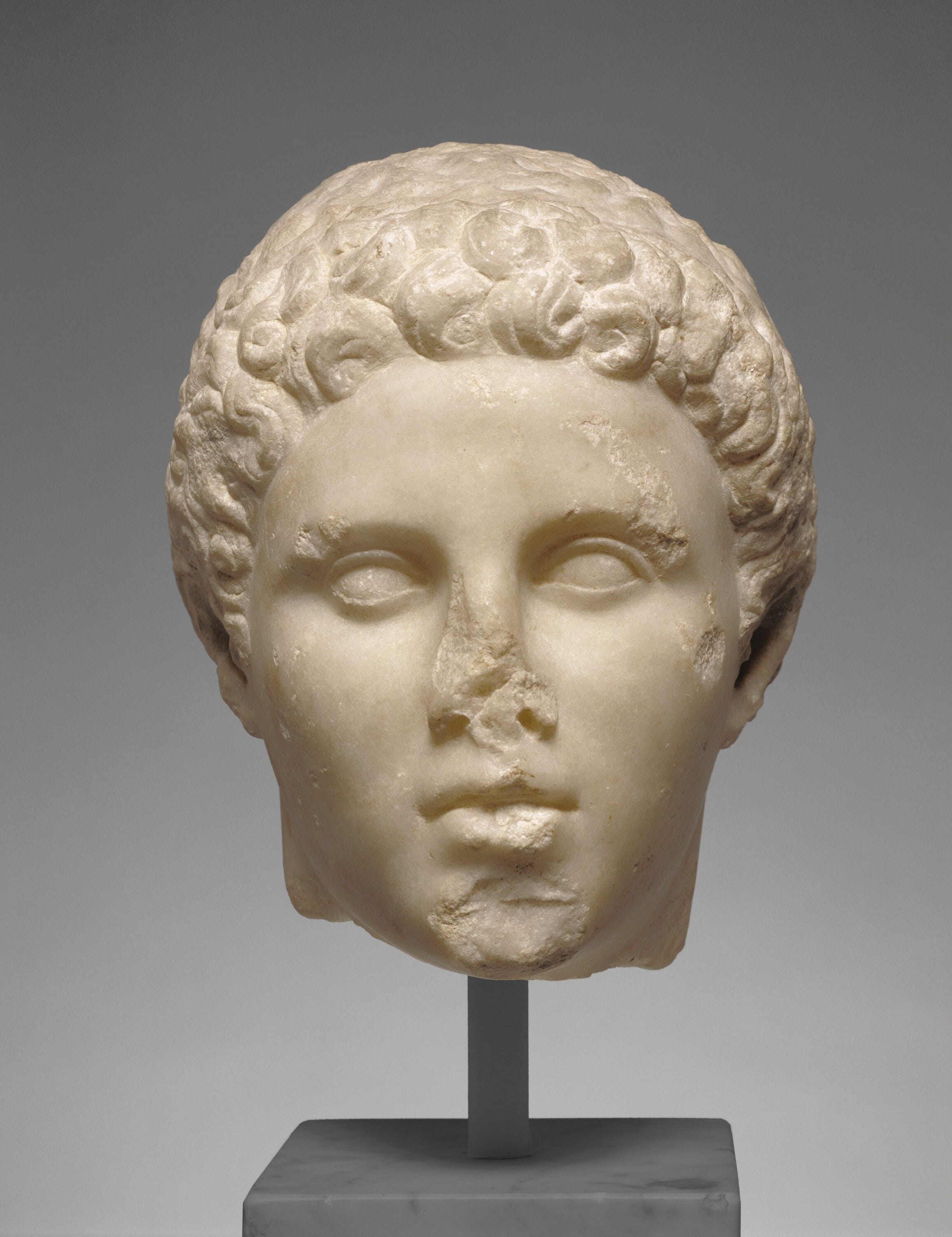
It is possible to view these events as mere coincidences, and Alexander merely as a big fan of a very popular epic poem. But it is equally possible to situate Alexander in the context of ancient political philosophy, specifically concerning the role that poetry should or should not play in the moral formation of a leader.
You see, not everyone thought that poetry was altogether a good thing. Plato’s Republic infamously forbade it from the ideal city altogether. Homer fared especially badly: his work was pretty much at the top of the list of banned books in this “utopia.” Why? Well, poetry in general (and especially villainous Homer) was simply mimesis, or imitation, dangerously combining fact and fiction and falling very far short of capturing the truth—what’s more, it appealed to the emotions with its high drama.
I suppose Plato had no idea what was coming in the person of Alexander (obviously). There’s no doubt that Alexander was regarded as a virtuous and noble leader by virtually every ancient author, and a great deal of modern ones as well, despite his love of Homeric heroes and their antics.
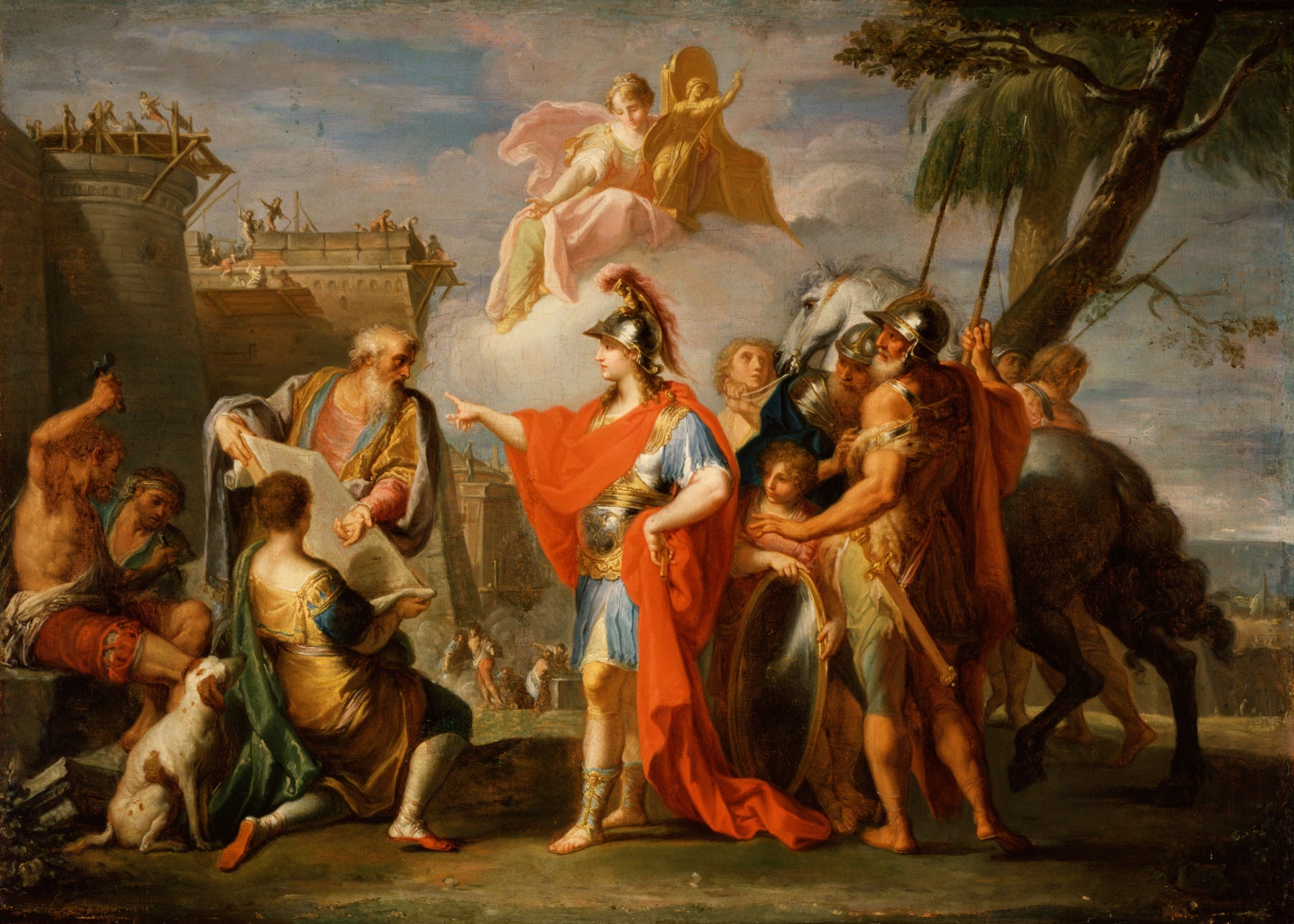
In the Laws, Plato walks back some of this harsh disavowal of poetry. Instead of being censored outright, the speakers in the dialogue argue for a model in which poetry is essentially regulated so that budding citizens can use it for good and not for bad, extracting its best components and using them for moral formation.
We see this idea of moderation in reading poetry reiterated centuries later in the work of Imperial Greek author Plutarch. In his moral treatise How the Young Man Should Study Poetry, Plutarch moves from the level of the government to the level of the individual, outlining a methodology for safely approaching poetry in the classroom. First and foremost, it is important for the student of poetry to recognize that poets are liars. Second, one must understand how allegory, allusion, and exaggeration work. Finally, the student must be strong enough in terms of moral fiber to not be unduly impressed by any of the things that happen in a poetic tale. Not all poetry is created equal; not every part of a given poem is conducive to cultivating virtue, and thus the ability to be a good leader in one’s city.
A contemporary of Plutarch, sophist/philosopher/sage/author Dio Chrysostom dramatizes these kinds of considerations in his Kingship Orations. In the second of this series, Dio imagines a teenage Alexander in dialogue with his father, Philip. Philip is interrogating Alexander about his reading choices; in response, Alexander states that poetry is not good for everyone, and, moreover, not all poetry is good for everyone. In particular, he says, Homer is suited to men like himself and his father, who aspire to conquer all the world.
The Kingship Orations were a series of speeches (whether Dio actually delivered them or not is unclear) that scholar generally agree were addressed to Emperor Trajan, a “mirror of princes” text that puts Dio in the position of philosophical advisor. Implicitly, Trajan is to model himself on great rulers like Alexander.
A through line in political philosophy that discusses kingship is that, essentially, the good king is a good philosopher—maybe not in an academic or professional sense, but he should have the strong character, intellectual foundation, and moral discernment necessary to lead with reason and virtue, not vice and caprice. It’s almost a paradox: Reading poetry is an activity in which a ruler should engage, as it has the potential to make that ruler better. However, in order to safely read poetry and not be influenced for the worse, the king needs to be a truly virtuous sort of person, an Alexander of his day. I would argue too that the ideal king needs to have a thorough understanding of tradition: literary tradition, historical tradition, philosophical tradition, cultural tradition, and so on.
These concerns carry into the modern day, although I think that we have ceased to worry so much about poetry and have moved onto other formats, such as video games or social media. The gratuitous violence of a video game is largely seen as detrimental; in contrast, a work with rather extensive violence, but also substantial moral themes (e.g., Dune or The Lord of the Rings) is seen as acceptable because of the benefit it seemingly confers upon the reader.
You are what you read, but what and, crucially, how you read are determined by who you are. Reading is reciprocal. We influence the text as much as the text influences us; what acts as a good influence on one reader, and is thus a “good” book, may be a bad influence upon another, and thus become a “bad” book. If, as Plato suggests, thought is the dialogue the soul has with itself, the lesson a given text carries with it is brought out in a dialogue that the reader has with the book. No text can be said contribute to or detract from virtue formation in the reader unless we know who that reader is as an individual.
One thing is for sure: those seeking moral improvement, kings or not, should be reading deeply and thinking deeply, heeding the wise counsel of a Plutarch or a Dio or even a Plato, skeptical as he was about poetry’s dangerous power.
Thank you so much for reading, and take care until next time,
MKA
I think of Alexander as promoting a certain kind of imperialism and cultural traits such as heroique endevaours that should have some continuities and discontinuities with the life on the polis, so the observation of he was deeply influenced by Homer... just look so interesting i mean he was strong motivated by greek cultural traits but at the same time he went beyond of them, at least politically speaking o.o Maybe in a sense he was more Persian (empire) than Greek (polis)? The same goes for platonic speculations, raised in a polis in crisis end up in a kind of imperial polical theory with neoplatonists (triying to follow here Peter Sloterdijk's account in Speheres II)
I am so charmed by the idea that reading poetry is dangerous; I think it is in the best sense of the word. The reader risks being challenged and changed.