
How to Read a Text When You Hate the Author
From Homer to Plato and beyond, the reputations of polarizing authors has always influenced the reception of their works.

At the beginning of January, I had the opportunity to go to the annual meeting of the Society for Classical Studies (better known as the SCS) in San Francisco. It was great to catch up with friends and colleagues and hear about the exciting work that’s being done in a variety of areas!
I gave a paper about the work of Plato and how it was received in the Second Sophistic. My talk focused on Fronto, second-century rhetorician and tutor/personal friend to Marcus Aurelius, and his nuanced relationship with Greek philosophy as someone who loved and deeply believed in the power of rhetoric. Fronto doesn’t really idolize the philosophers like some of his contemporaries—in general, he likes to take inspiration from all kinds of “sages,” not just “real philosophers,” such as Homer or Ennius. Fronto’s worldview seems to be that wisdom is everywhere for those who seek it.
I bring this up as some context for today’s discussion of ancient literary criticism. Not everyone in antiquity was as open-minded a reader as Fronto! A certain trend I’ve observed in my study of Ancient Greek and Roman literature is the following:
Ancient readers often seemed to feel that author’s work was a direct reflection of that author’s character. Qualis vita and all that.
Aristotle wrote that character is formed by habitual action (EN 1103a–b),
and that speech has some direct relationship with the speaker’s ethos (Rhet. 1356a). Plutarch takes it a step further, claiming that casual jokes or witticisms reveal a person’s moral nature possibly even more clearly than great deeds (Life of Pericles 1.3; cf. Alex. 1.2 for a similar sentiment). Cicero declares that “just as a man himself is, so is his way of speaking; moreover, his deeds are similar to his speech, and his life is similar to his deeds” (qualis autem homo ipse esset, talem eius esse orationem; orationi autem facta similia, factis vitam, Tusc. 5.47).
One of the most straightforward examples is the reception of Plato. Mostly, Plato was revered as a divinely-inspired sage, the gifted successor to Socrates’ “throne.”
But there was also a certain amount of anti-Platonic sentiment among intellectuals as well. Because there were certain problems discernible in Platonic thought, there arose a school of thought—albeit an uncommon one—that Plato himself was not a virtuous sage, but a villain. There was a rumor (attested in Aulus Gellius, Athenaeus, and Diogenes Laertius, among others) that Plato and Xenophon were rivals with one another, and Plato really had it out for Socrates’ other students because they were a threat to his position as the “successor” of Socrates. This kind of unmitigated ambition was seen not only as distasteful, but as a kind of proof that his philosophy was no good either. Part of this kind of “rewriting” of Plato’s legacy arose from those who were, in simple terms, disagreed with various parts of Platonic philosophy.
This mode of criticism was not limited to philosophers; Herodotus and Homer are two other notable examples of this general trend. Those who thought Herodotus’ ethnographic writing was fantastical and exaggerated characterized him as a liar, while those who found Homer’s gods to be ridiculous and petty thought Homer was a scoundrel who misrepresented the heroic past.
It seems to me that ancient readers liked for their authors to somehow reflect (the reader’s impression of) their work. For example, readers liked to think that love poets writing about their beloveds were referring to real people. This brings me to the point I’m essentially trying to raise in the title of this week’s essay: how does the reader’s opinion of the author affect that reader’s impression of the work?
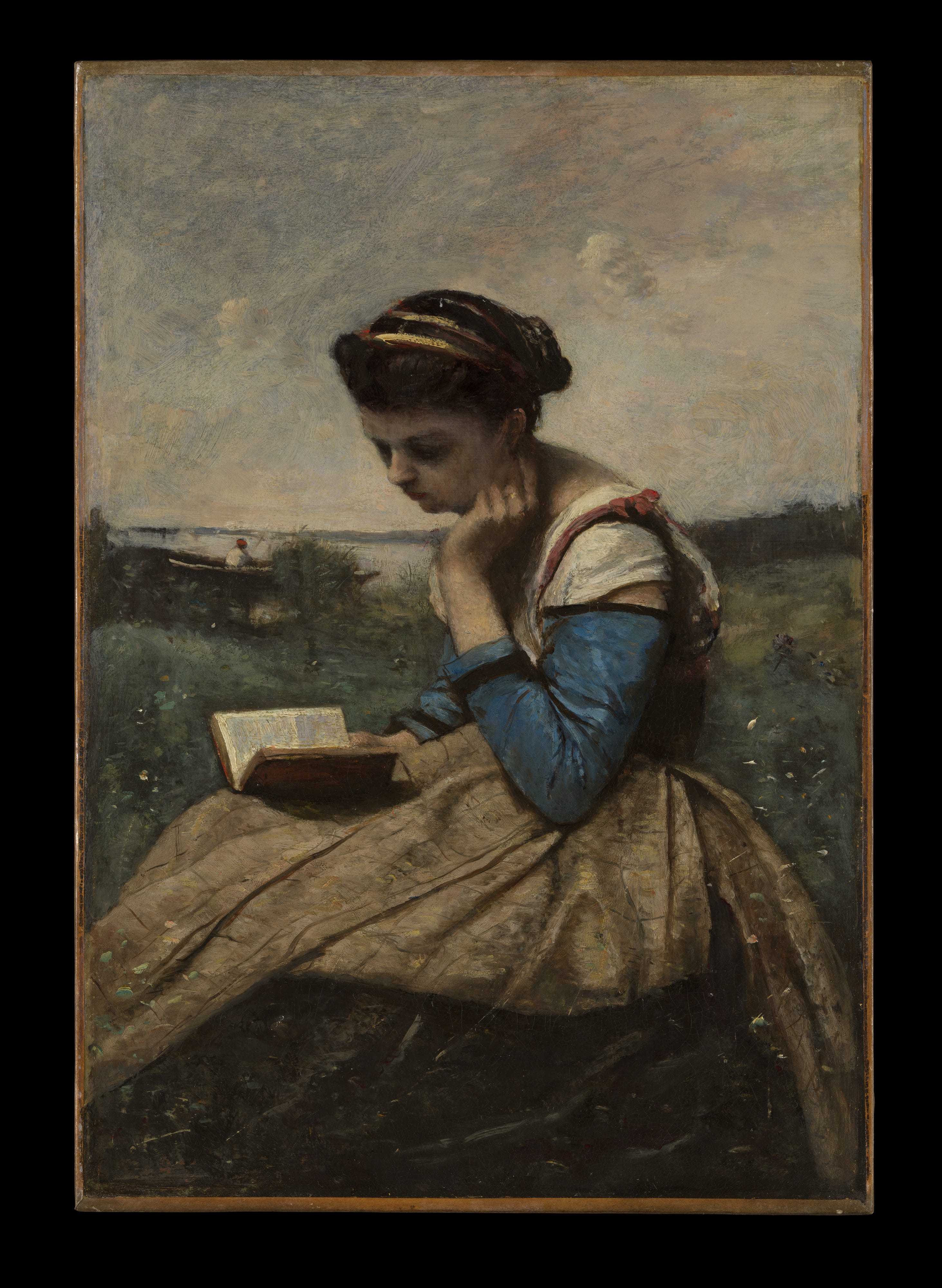
In antiquity, I can’t find much trace of any theory nearing Barthe’s infamous “death of the author” hypothesis, which posits that an author’s biography and even intentions for the work are not so important for construing meaning. I’m sure some readers didn’t much care about who the author was, but the splashiest examples of literary criticism apparently care very deeply.
With respect to modern popular culture, I think that the average person is more unlikely to accept “the death of the author” when engaging with any given piece of media. This doesn’t even always have to do with the ethics of choosing not to engage with the creations of people deemed to be immoral: in the era of social media, consumers crave “authenticity” and the appearance of reliability from their sources. At the same time, some creations outgrow their authors in a sense, becoming pop culture phenomenons that stand on their own, outside of who the author is.
Do we read like ancient readers, and try to scrutinize or even reconstruct an author’s biography to make text and writer cohere with one another? Or do we have to accept that sometimes the creator and the creation are not as entwined as we might want them to be? As a contemporary reader, I find that the answer is that we have to engage in both of these modes of reading depending on the situation.
There are no neat, easy answers here, and certainly no universal answers that apply to every case! For me personally, it is very much case-dependent. The passage of time is also a factor: I feel no real desire to know “who” Homer or Plato or Herodotus really was. I simply enjoy their works and their impact on my intellectual development. Maybe a more recent author is different. Maybe not. I can’t speak in generalities, only in particulars.
A greater point I’m getting at here is that reading is itself a formative activity with philosophical and moral aspects to it, in that it is up to individuals to discern the answers to these kinds of questions for themselves. There is no “rule” for reading. Going back to Plato for a moment, those anti-Platonists who deemed Plato to be a malicious and envious person weren’t just being dramatic. They were using the polarities they constructed between an “good” Plato and a “bad” one to articulate and develop their own ideas not only about philosophy, but about how a philosopher (or, really, any more general “authority figure” should behave).
And one more thing, coming back to Plato: isn’t the thought of the great philosopher as a terrible person kind of appealing in its own way? Even by the time of his death, Plato was basically already a cultural icon. When an author and their work have become legendary, it’s intriguing when someone claims that their “true” personality wasn’t all that and a bag of chips. It’s not so much that be claiming Plato was flawed, the critic looks better; it’s more about encouraging readers to reorient their views of the canon, to be open to new possibilities.
Take all this with a grain of salt! Just some food for thought, and some musings I had when I was thinking about this research project. Thanks so much for reading! Take care until next time.
MKA
Love your analysis of this! So applicable to the modern day.